August 14, 2026 · 12 min
There is no best restaurant POS — there's the best POS for a counter-service café, a different one for a 120-seat full-service floor, and a third for a bar doing 300 tabs on a Saturday. We integrate with all of them, which is a useful place to compare from: we see what each one is actually like to live with.
The short answers
- Counter service, cafés, food trucks, first locations: Square — cheapest to start, fastest to learn, hardware you can buy today.
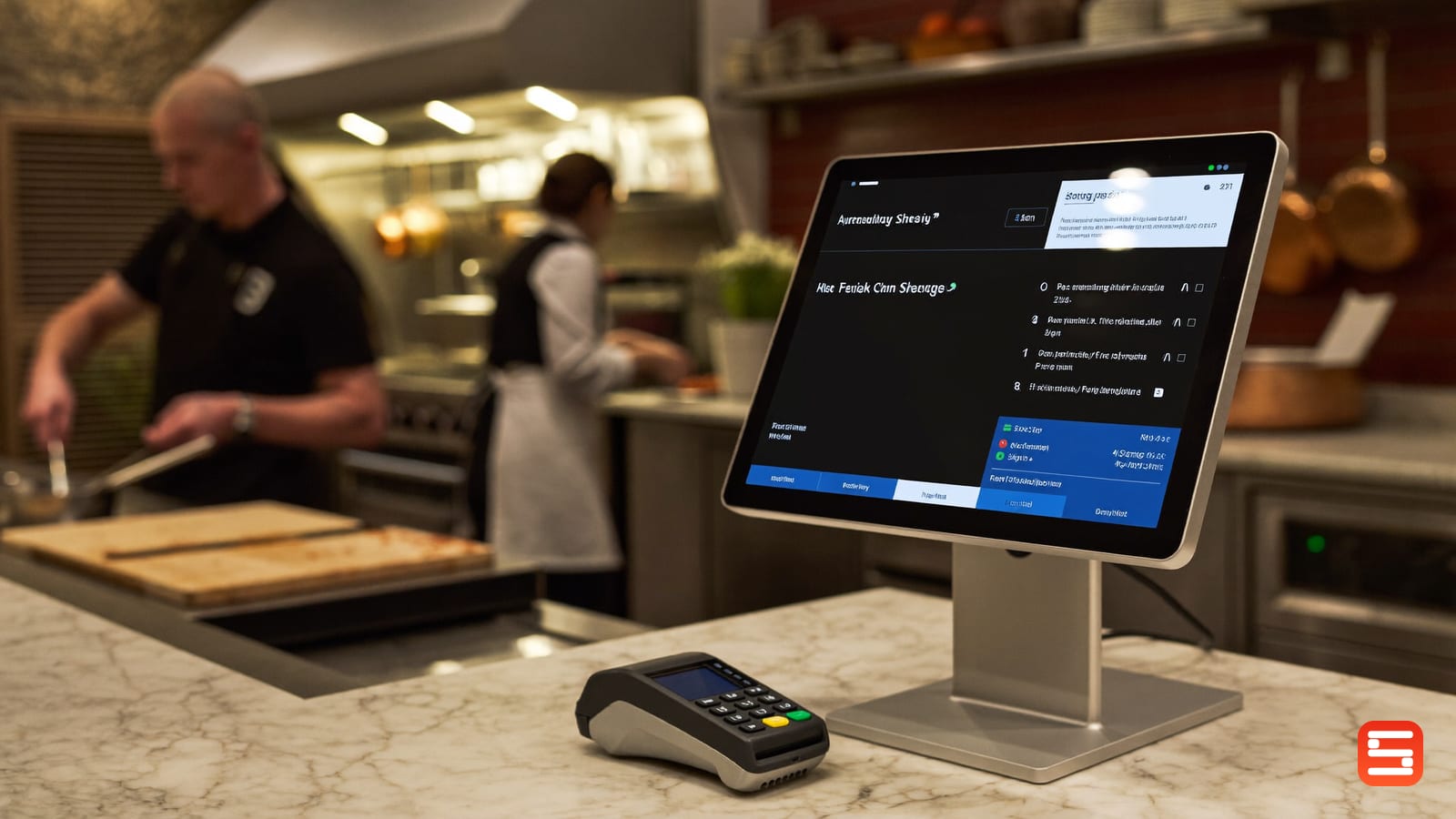
- Full-service dining and multi-location groups: Toast — handhelds, kitchen displays, tips and payroll built for restaurant labor.
- Bars: SpotOn or Toast — tab management and speed-of-service features matter more than anything else.
- Existing Clover hardware from your bank or processor: keep it if it works — Clover's app market covers most gaps.
- Inventory-heavy or multi-concept operations: Lightspeed — the deepest stock and vendor tooling of the group.
The five questions that actually decide it
- What's the ALL-IN monthly cost? Terminal subscriptions + required add-ons + processing spread. Entry pricing is bait; the add-on stack is the bill.
- Is processing negotiable or locked? Toast locks you to Toast payments; Square is flat-rate; others negotiate. On $1M of volume, 30 basis points is $3,000/year.
- What happens when the internet dies? Offline mode differences show up on your busiest night, which is statistically when Comcast fails.
- Can you export YOUR data — guests, sales history, menu — if you leave? Some systems make leaving expensive on purpose.
- Does it sync two-way with your ordering channel, or does the vendor want to own that too? A POS that traps online ordering inside its ecosystem owns your guest list.
The trap: buying your whole stack from the POS vendor
Every POS company now sells online ordering, loyalty, marketing, and gift cards, and bundles them hard. The convenience is real, but so is the trade: template ordering pages, guest data locked in the vendor's ecosystem, and pricing that creeps because switching means replacing everything at once.
The structure that keeps leverage on your side: let the POS run the line — tickets, kitchen, payments — and keep the guest relationship on a channel you own: your domain, your branded ordering, your guest list, synced two-way with whatever POS you run. Then the day you switch POS (most restaurants do within five years), your guests, reviews, and revenue channel come with you.
Switching costs less than staying wrong
Operators tolerate a wrong POS for years because switching feels catastrophic. It isn't anymore: menu exports, two-week parallel runs, and trainers who've done it a hundred times are standard. If your POS costs you speed on Friday night or holds your data hostage, price the switch — it's usually one slow month's worth of pain for a decade of fit.